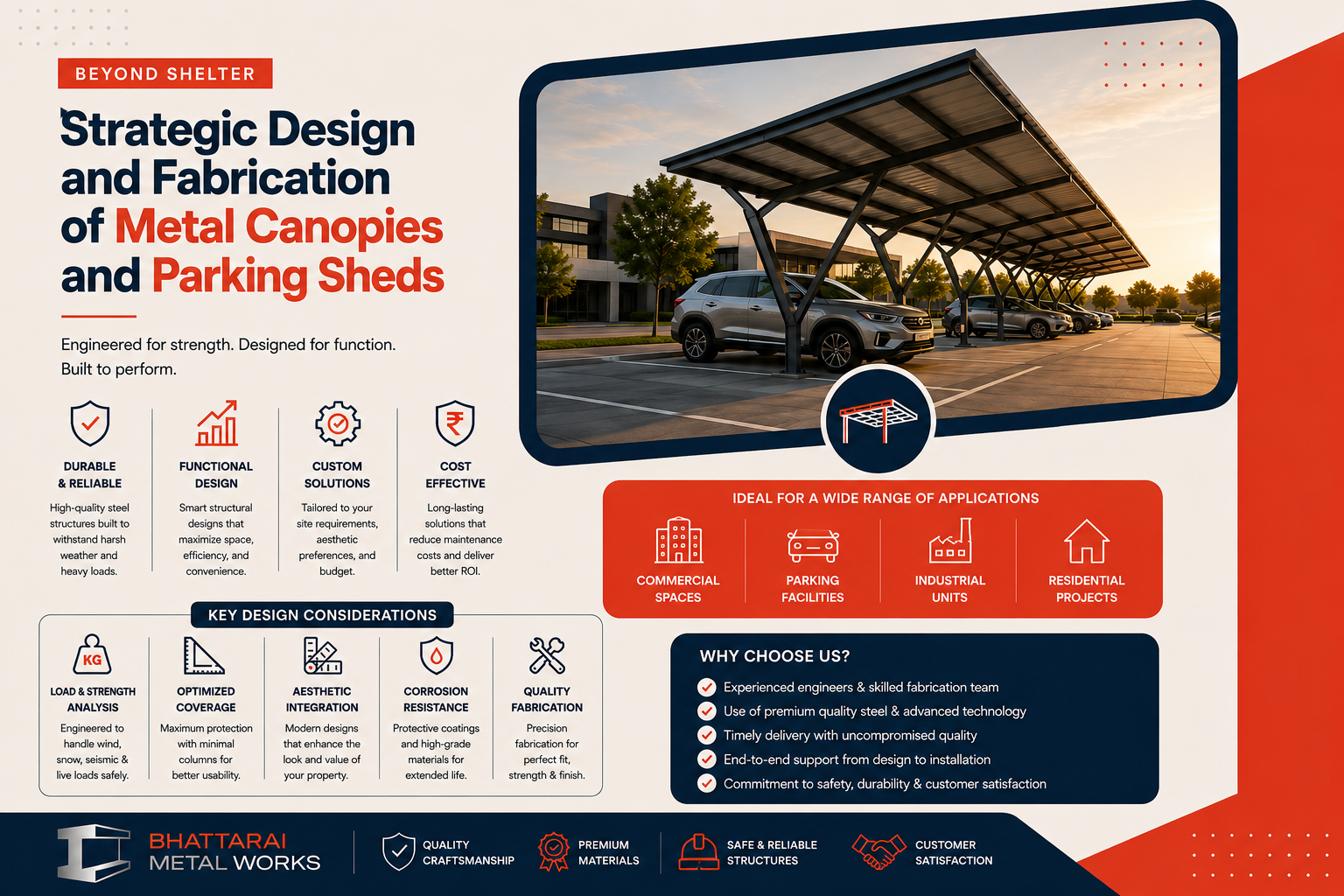
The Strategic Advantage of Metal Canopies and Parking Sheds
In modern construction and property management, the demand for versatile and durable outdoor structures continues to grow. Metal canopies and parking sheds, far from being mere utilitarian additions, represent a strategic investment. They offer robust protection against the elements, enhance property aesthetics, and improve functional space utilization across residential, commercial, and industrial settings. At Bhattarai Metal Works, we understand that a well-designed canopy or shed is a blend of engineering precision and practical utility, built to withstand the test of time and weather.
From safeguarding vehicles and equipment to providing comfortable shaded areas for pedestrians or outdoor workspaces, these structures play a crucial role. This guide delves into the essential considerations for planning, material selection, fabrication, and installation, ensuring your investment delivers maximum value and longevity.
Key Design Considerations for Functionality and Durability
The success of any metal canopy or parking shed project hinges on thoughtful design. It's not just about covering an area; it's about creating a structure that is safe, efficient, and integrated with its environment. Here are the primary factors we consider:
- Site Analysis: Understanding the specific site conditions is paramount. This includes sun path, wind direction and speed, rainfall patterns, ground stability, and existing infrastructure (underground utilities, overhead lines). For instance, in regions like Nepal with monsoon seasons, robust drainage systems and strong foundations are non-negotiable.
- Purpose and Scale: Is it for a single vehicle, a fleet, a pedestrian walkway, or an outdoor storage area? The intended use dictates the size, height, and structural load requirements. A heavy-duty industrial shed will differ significantly from a residential car park canopy.
- Structural Integrity: Engineering for local weather conditions is crucial. This involves calculating wind loads, snow loads (if applicable), and seismic considerations. Proper column spacing, beam sizing, and bracing are essential to prevent structural failure.
- Drainage Solutions: Effective water management is vital to prevent water pooling, runoff issues, and potential damage to the structure or the area beneath. Gutter systems, downspouts, and proper roof pitch are integral design elements.
- Aesthetics and Integration: The design should complement the existing architecture. Choices in frame style, roofing material color, and overall finish can significantly impact the visual appeal and property value.
Material Choices: Mild Steel (MS) vs. Stainless Steel (SS) and Roofing Options
The selection of materials directly impacts the durability, maintenance requirements, and overall cost of your canopy or shed. We primarily work with steel due to its strength and versatility.
Frame Materials:
- Mild Steel (MS): A cost-effective and strong option, ideal for most applications. MS frames require proper surface preparation, priming, and painting (often with anti-corrosive paints) to prevent rust, especially in humid or rainy environments. Regular maintenance extends its lifespan considerably.
- Stainless Steel (SS): Offers superior corrosion resistance and a premium aesthetic, making it suitable for high-end residential, commercial, or coastal applications where salt air is a concern. While more expensive upfront, SS requires less maintenance and retains its finish longer.
Roofing Materials:
- Corrugated Galvanized Iron (CGI) Sheets: A popular, economical, and durable choice, especially common in South Asia. Available in various gauges and colors, offering good weather protection.
- Polycarbonate Sheets: Lightweight, translucent, and impact-resistant, allowing natural light penetration while blocking harmful UV rays. Ideal for areas where light is desired, such as walkways or garden canopies.
- Sandwich Panels: Comprising two metal sheets with an insulating core, these offer excellent thermal insulation and soundproofing, making them suitable for sheds that might house temperature-sensitive equipment or require a quieter environment.
- Color-Coated Steel Sheets: Offer enhanced aesthetics and additional corrosion protection, with a wide range of colors to match architectural themes.
The Fabrication and Installation Process: What to Expect
A seamless project from concept to completion requires a structured approach:
- Consultation & Design: We begin with a detailed discussion of your needs, site assessment, and initial design sketches. Our team works with you to finalize a design that meets your functional and aesthetic requirements.
- Material Procurement: Sourcing high-quality steel and roofing materials from trusted suppliers.
- Precision Fabrication: In our workshop, skilled fabricators cut, bend, and weld the steel components according to precise engineering drawings. This includes frame elements, supports, and connection plates. We utilize robust welding techniques to ensure structural integrity.
- Surface Treatment: For MS structures, this crucial step involves cleaning, priming, and applying multiple coats of weather-resistant paint to protect against corrosion.
- Logistics & Foundation Work: Transporting fabricated components to the site. Simultaneously, site preparation, including foundation excavation and concrete pouring for columns, is completed.
- Onsite Assembly & Installation: Erecting the steel frame, securing it to the foundations, and then installing the chosen roofing material. This phase requires meticulous attention to detail, alignment, and safety protocols.
- Finishing & Quality Check: Final touches, sealing, and a thorough inspection to ensure the structure meets all quality and safety standards.
Our expertise in roof truss and shed fabrication directly translates to the robust structural design of our canopies and parking sheds, ensuring long-term stability.