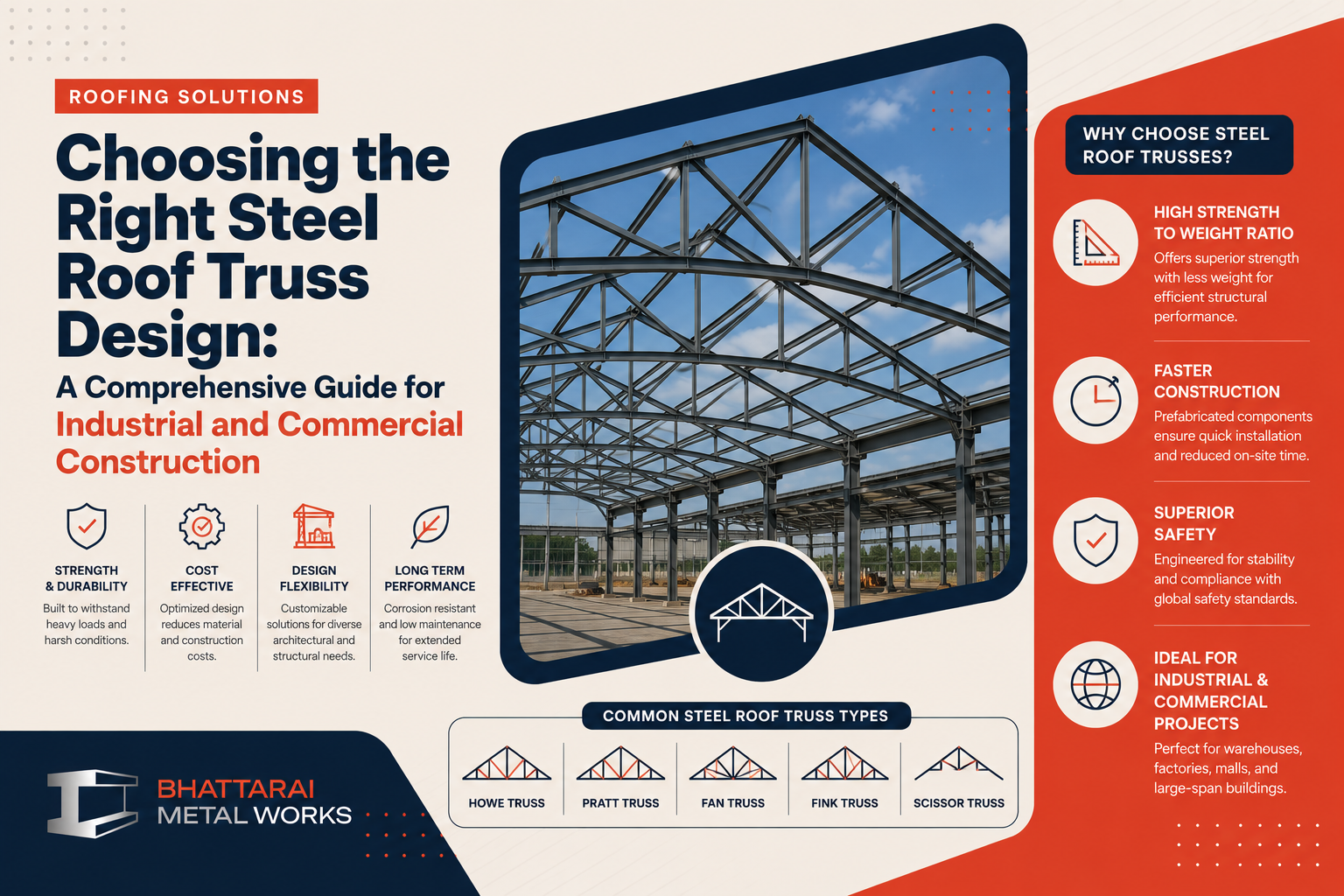
The Indispensable Role of Steel Trusses in Modern Construction
In the realm of large-span construction, from sprawling industrial warehouses to modern commercial complexes, the roof structure is paramount. Steel roof trusses stand out as the preferred solution, offering unparalleled strength, durability, and design flexibility. Unlike traditional timber structures, steel trusses can span vast distances without intermediate supports, creating open, versatile spaces essential for contemporary building needs.
Why Steel Trusses? Advantages in Strength, Span, and Durability
- Superior Strength-to-Weight Ratio: Steel offers exceptional strength, allowing for lighter yet incredibly robust structures capable of handling significant loads, including heavy snow, wind, and even seismic forces.
- Longer Spans: The inherent strength of steel enables the creation of large, column-free interiors, which are crucial for industrial operations, large assembly halls, and open-plan commercial spaces.
- Durability and Longevity: Steel is resistant to rot, pests, and fire (when properly treated), ensuring a longer service life and lower maintenance costs compared to other materials.
- Design Versatility: Steel can be fabricated into a multitude of shapes and sizes, offering architects and engineers immense freedom in design while maintaining structural integrity.
- Sustainability: Steel is a highly recyclable material, contributing to more sustainable construction practices.
Understanding Common Steel Roof Truss Designs
The choice of truss design significantly impacts a building's structural performance, aesthetic appeal, and overall cost. Here are some of the most common steel roof truss types:
Pratt Truss: Efficiency and Simplicity
The Pratt truss is characterized by its vertical members in compression and diagonal members in tension. This design is highly efficient for parallel chords, making it popular for long-span bridges and industrial roofs. It's economical to fabricate and install, especially where diagonal members can be made lighter due to tension loads.
Warren Truss: Versatility for Varying Loads
The Warren truss uses equilateral triangles to distribute loads evenly across its structure. Its members alternate between compression and tension, which helps in minimizing secondary stresses. This versatility makes it suitable for various spans and load conditions, often seen in industrial buildings and bridge construction.
Howe Truss: Classic Design with Unique Load Distribution
Similar to the Pratt truss but with diagonal members in compression and vertical members in tension. The Howe truss is particularly effective for heavy, concentrated loads and is often used in large-span roofs and bridges, especially where timber was traditionally used, making it a classic and robust choice.
Fink Truss: Economical for Shorter Spans
The Fink truss is a widely used and economical option for shorter to medium spans, typically found in residential and light commercial buildings. Its web members form a W-shape, providing efficient load distribution with fewer members, thus reducing material costs.