Introduction: The Foundation of Safety and Style
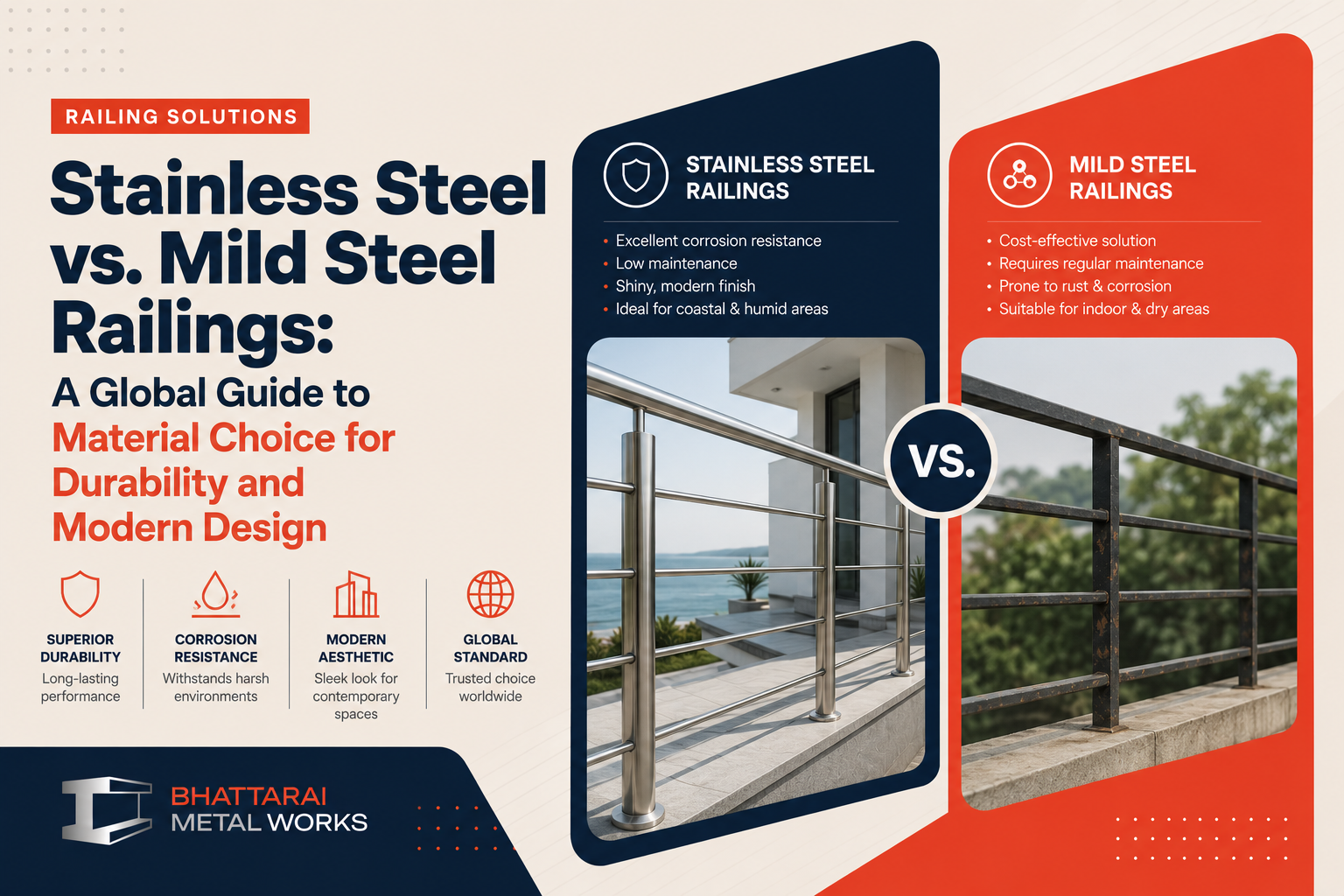
Railings are more than just safety barriers; they are integral architectural elements that define the character and functionality of a space. From grand staircases in commercial complexes to practical balcony guards in residential buildings, the material choice profoundly impacts durability, maintenance, and visual appeal. Among the most popular options, Stainless Steel (SS) and Mild Steel (MS) stand out, each offering distinct benefits and considerations. Understanding these differences is key to selecting the optimal material for your project's specific demands and environment.
Understanding Mild Steel (MS) Railings
Mild Steel, also known as low-carbon steel, is a widely used ferrous metal recognized for its strength and versatility. It's an alloy of iron and carbon, making it robust and easily workable.
Advantages of MS Railings
- Cost-Effectiveness: MS is generally more affordable than stainless steel, making it an excellent choice for budget-conscious projects without compromising on structural integrity.
- High Strength and Ductility: It offers excellent tensile strength, making it durable and capable of withstanding significant loads. Its ductility allows for complex bending and shaping, enabling diverse design possibilities.
- Ease of Fabrication: Mild steel is relatively easy to cut, weld, and form, which simplifies the manufacturing process and can reduce fabrication time.
- Versatility in Finishing: MS can be easily painted, powder-coated, or galvanized, offering a vast array of color and texture options to match any aesthetic, while also providing crucial protection against corrosion.
Considerations for MS Railings
- Corrosion Risk: Without proper surface treatment (like galvanization, priming, and painting), mild steel is highly susceptible to rust and corrosion, especially in humid or outdoor environments.
- Higher Maintenance: To maintain its appearance and prevent rust, MS railings require regular cleaning, inspection, and re-painting or re-coating over time.
Ideal Applications: MS railings are well-suited for interior applications, industrial settings where robust functionality is prioritized, and outdoor areas where regular maintenance and protective coatings are feasible. They are common in residential staircases, security grills, and general structural supports.
Exploring Stainless Steel (SS) Railings
Stainless Steel is an iron alloy with a minimum of 10.5% chromium, which provides its characteristic corrosion resistance. Different grades (e.g., 304, 316) offer varying levels of resistance and strength.
Advantages of SS Railings
- Superior Corrosion Resistance: The chromium content forms a passive layer that protects SS from rust, making it ideal for outdoor, coastal, and high-humidity environments.
- Aesthetic Appeal: Stainless steel boasts a sleek, modern, and sophisticated appearance that complements contemporary architectural designs. It can be polished to a mirror finish or brushed for a satin look.
- Low Maintenance: Due to its inherent corrosion resistance, SS railings require minimal maintenance, primarily involving occasional cleaning to retain their luster.
- Hygienic Properties: Its smooth, non-porous surface makes it easy to clean and sanitize, making SS a preferred choice for hospitals, kitchens, and food processing facilities.
- Strength-to-Weight Ratio: SS offers excellent strength, allowing for slender designs that maximize space and light without compromising safety.
Considerations for SS Railings
- Higher Initial Cost: Stainless steel is significantly more expensive than mild steel, both in material cost and specialized fabrication techniques.
- Specialized Fabrication: Working with SS requires specific tools and welding techniques to maintain its corrosion resistance and aesthetic finish, often demanding skilled fabricators.
Ideal Applications: SS railings are perfect for premium residential and commercial spaces, marine environments, exterior balconies, swimming pool areas, and any application where aesthetics, hygiene, and minimal maintenance are paramount.