Your Orders (0)

Your cart is empty.

Back to blog
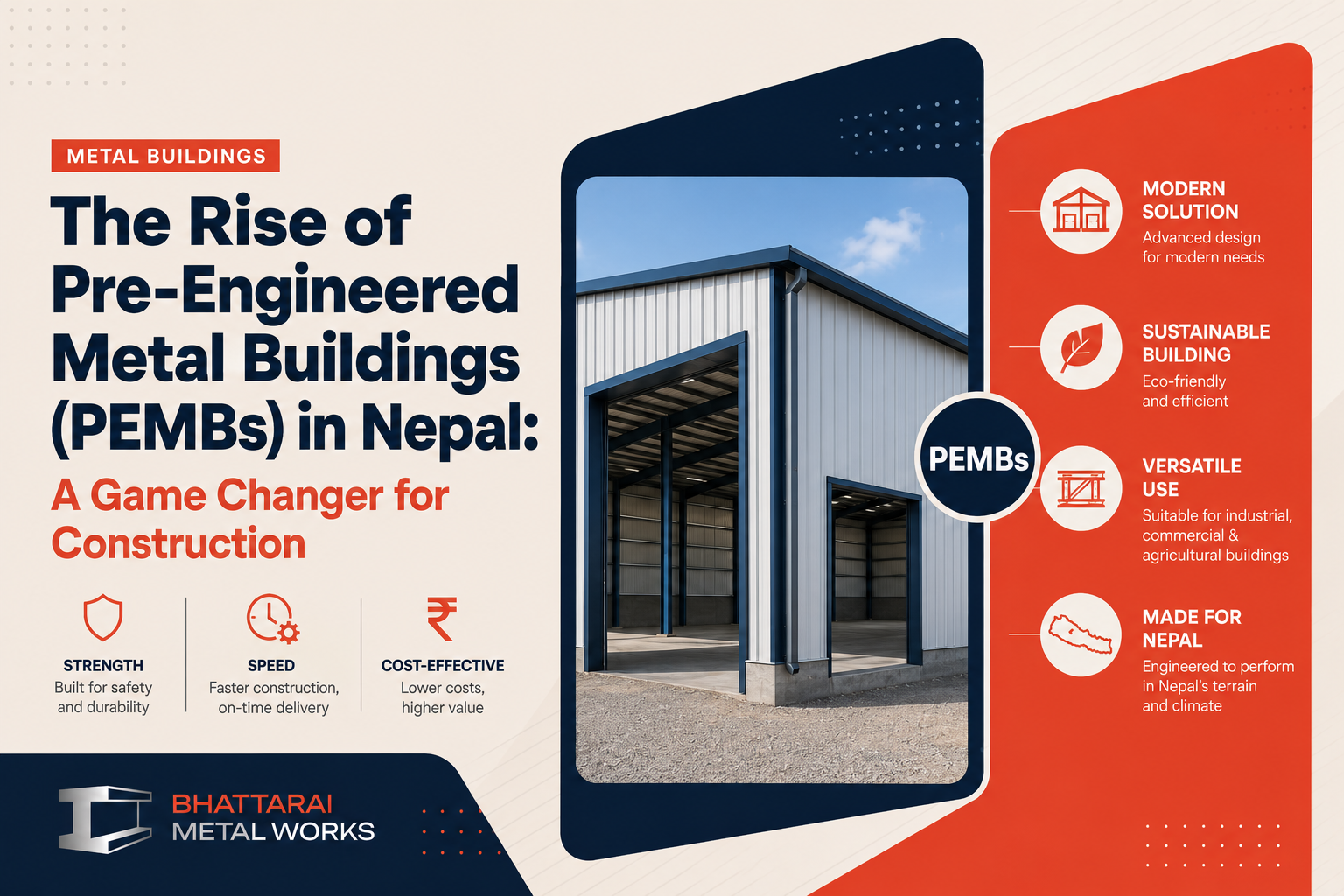
The Rise of Pre-Engineered Metal Buildings (PEMBs) in Nepal: A Game Changer for Construction

Industry Trends

The Rise of Pre-Engineered Metal Buildings (PEMBs) in Nepal: A Game Changer for Construction

May 12, 20267 min readBhattarai Metal Works Team

Pre-Engineered Metal Buildings (PEMBs) are rapidly gaining traction in Nepal's construction sector. This article explores the growing trend, examining the advantages PEMBs offer in terms of speed, cost-efficiency, and durability, while also discussing the unique challenges and opportunities for their widespread adoptio

Understanding the PEMB Revolution in Nepal's Construction Sector

Nepal's construction landscape is continually evolving, driven by the need for faster, more efficient, and durable infrastructure. Amidst this evolution, Pre-Engineered Metal Buildings (PEMBs) have emerged as a significant trend, offering a modern alternative to traditional construction methods. These factory-fabricated steel structures are designed to precise specifications, allowing for rapid assembly on-site.

What Exactly are Pre-Engineered Metal Buildings?

PEMBs are essentially complete building systems made of structural steel components that are manufactured off-site and then shipped to the construction site for assembly. Unlike conventional steel structures, PEMBs utilize a tapered frame system, optimizing material usage and reducing overall weight. This method leads to significant savings in both time and cost.

Key Advantages Driving PEMB Adoption in Nepal

  • Speed of Construction: One of the most compelling benefits of PEMBs is their expedited construction timeline. Since components are pre-fabricated, on-site assembly is significantly faster, reducing project durations and allowing for quicker occupancy. This is crucial for commercial and industrial projects where time-to-market is critical.
  • Cost-Effectiveness: The optimized design and factory-controlled manufacturing process of PEMBs lead to reduced material waste and labor costs. Furthermore, their lightweight nature often translates to simpler foundation requirements, contributing to overall cost savings.
  • Durability and Longevity: Steel, the primary material in PEMBs, is known for its high strength-to-weight ratio, resistance to seismic activity (a crucial factor in Nepal), and durability against various weather conditions. When properly treated, these structures offer a long service life with minimal maintenance.
  • Design Flexibility: While 'pre-engineered' might suggest rigidity, PEMBs offer considerable design flexibility. They can accommodate large clear spans without intermediate columns, making them ideal for warehouses, factories, and exhibition halls. Architects and engineers can customize dimensions, roof slopes, and integrate various architectural finishes.
  • Sustainability Potential: Steel is a highly recyclable material, making PEMBs a more environmentally friendly option compared to some traditional construction methods. The efficient manufacturing process also reduces on-site waste.

Applications of PEMBs in the Nepali Context

The versatility of PEMBs makes them suitable for a wide range of applications in Nepal:

  • Industrial Facilities: Factories, workshops, and manufacturing units benefit from the large spans and rapid construction of PEMBs.
  • Warehouses and Logistics Centers: The ability to create vast, column-free spaces is ideal for storage and distribution facilities, crucial for Nepal's growing logistics sector.
  • Commercial Buildings: Showrooms, supermarkets, and office complexes can leverage PEMBs for quick setup and modern aesthetics.
  • Institutional Structures: Schools, community halls, and healthcare facilities can be constructed efficiently, addressing urgent infrastructure needs.
  • Agricultural Buildings: Storage sheds and processing units in the agricultural sector can also benefit from durable and cost-effective PEMB solutions.

Challenges and Considerations for PEMB Implementation in Nepal

Despite their advantages, the widespread adoption of PEMBs in Nepal faces certain considerations:

  • Local Expertise and Workforce Training: While assembly is straightforward, specialized knowledge in design, fabrication supervision, and precise installation is essential. Investment in training local engineers and skilled workers is vital.
  • Regulatory Frameworks: Ensuring that PEMB designs and materials comply with local building codes and seismic regulations is paramount. Clear guidelines and standardized approval processes are necessary.
  • Material Sourcing and Quality Control: Reliance on imported steel components can be subject to supply chain disruptions and currency fluctuations. Promoting local high-quality steel production and stringent quality control at every stage is crucial.
  • Awareness and Perception: Overcoming traditional biases and educating stakeholders about the long-term benefits and quality of PEMBs is an ongoing effort.

The Role of Local Fabricators and Future Outlook

Local metal fabrication companies play a pivotal role in the success of PEMBs in Nepal. While core structural components might be imported, local fabricators can contribute significantly through secondary steelworks, customized fittings, and on-site assembly and finishing. Their expertise in roof truss and shed fabrication, industrial rack systems, and various custom metal works complements PEMB projects, ensuring integration with local construction practices and providing crucial after-sales support.

As Nepal continues its journey of development and urbanization, PEMBs are poised to become an even more integral part of the construction industry. Their ability to deliver rapid, robust, and cost-effective solutions aligns perfectly with the nation's infrastructure demands, promising a more efficient and resilient built environment.