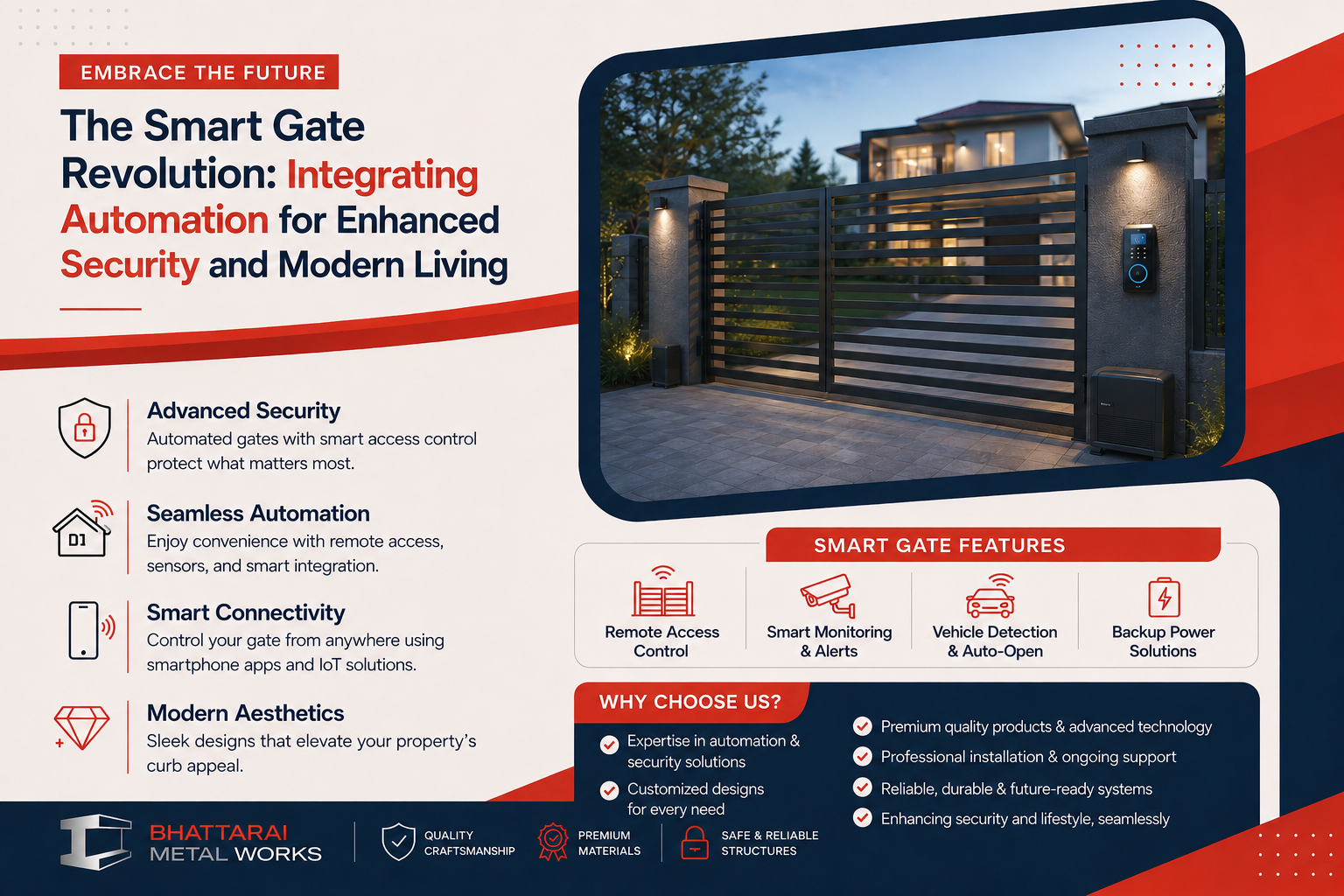
Introduction: The Dawn of Automated Access
, security and convenience are no longer luxuries but necessities. For property owners, architects, and project managers, the main gate stands as the first line of defense and the primary point of entry. While traditional gates offer physical barriers, integrating smart gate automation systems elevates them to a new level of functionality, offering seamless access control, enhanced security, and a touch of modern sophistication. At Bhattarai Metal Works, we understand the evolving needs of our global clientele, from residential complexes to industrial facilities, and how intelligent access solutions can transform daily operations and peace of mind.
This guide delves into the world of automated gates, exploring their benefits, the different types available, key components, and essential considerations for successful integration. Whether you are planning a new construction or upgrading an existing property, understanding gate automation is crucial for making informed decisions that align with modern living standards and security protocols.
Why Automate Your Gate? The Core Benefits
The decision to automate a gate goes beyond mere convenience; it's an investment in security, efficiency, and property value. Here are the compelling reasons why smart gate integration is gaining traction:
- Unparalleled Convenience and Time-Saving: Imagine arriving home or at your business premises and opening your gate with a simple click of a remote, a tap on your smartphone, or even automatically as your vehicle approaches. This eliminates the need to manually open and close heavy gates, especially during inclement weather or late at night, saving time and effort.
- Enhanced Security and Access Control: Automated gates significantly bolster security. They are more difficult to force open than manual gates and can be integrated with advanced access control systems like intercoms, RFID readers, biometric scanners, or CCTV. This allows for precise control over who enters and exits your property, providing a detailed log of activity and deterring unauthorized access.
- Increased Property Value and Curb Appeal: A well-designed, automated gate not only offers practical benefits but also adds a significant aesthetic appeal to any property. It signifies modernity, technological sophistication, and a commitment to security, thereby increasing its market value and curb appeal.
- Improved Accessibility for All: For individuals with mobility challenges, automated gates provide an invaluable solution, allowing them easy and independent access without physical strain. This inclusive design consideration is increasingly important in both residential and commercial settings.
- Safety Features: Modern automated gates come equipped with safety features such as photocells and pressure sensors that detect obstructions, preventing the gate from closing on vehicles, people, or pets, thus minimizing accident risks.
Understanding Gate Automation Systems: Types and Mechanisms
The type of automation system suitable for your property largely depends on the gate's design, material, and operational requirements. Bhattarai Metal Works offers integration-ready gate fabrication, ensuring compatibility with a wide range of automation solutions.
Swing Gate Automation
Swing gates, which pivot open like a traditional door, are common for residential and commercial properties. Automation for swing gates typically involves:
- Linear Actuators (Ram Arms): These are the most common type, consisting of an arm that pushes and pulls the gate open and closed. They are robust and suitable for most gate sizes.
- Articulated Arms: Ideal for gates mounted on large pillars or where mounting space is limited, these arms articulate to open and close the gate, mimicking the human arm's movement.
- Underground Systems: For a completely discreet aesthetic, underground operators are installed beneath the gate, providing power without visible components, perfect for premium decorative main gates where visual continuity is paramount.
Sliding Gate Automation
Sliding gates move horizontally along a track, making them ideal for properties with limited swing space or wide entrances. Their automation typically uses:
- Rack and Pinion Systems: A motor drives a gear (pinion) that meshes with a toothed rack attached to the gate, moving it smoothly along its track. This system is known for its durability and ability to handle heavy gates.
Solar-Powered Options: For remote locations or to reduce energy costs and environmental impact, solar-powered gate openers are an excellent choice. They use photovoltaic panels to charge batteries, providing reliable operation even during power outages.
Key Components of a Smart Gate System
A comprehensive automated gate system comprises several crucial components working in harmony:
- Gate Motors/Operators: The heart of the system, responsible for the physical movement of the gate. The choice depends on gate weight, size, and operational frequency.
- Remote Controls & Keypads: Traditional methods for opening and closing gates, offering convenience from inside a vehicle or on foot.
- Safety Sensors (Photocells): Essential for preventing accidents. These infrared beams detect obstructions in the gate's path, immediately stopping or reversing its movement.
- Access Control Systems: Beyond simple remote controls, modern gates integrate with:
- Intercoms: Audio or video communication with visitors.
- RFID Readers: For vehicle identification and automated entry.
- Biometrics: Fingerprint or facial recognition for high-security areas.
- Smartphone Apps: Control your gate from anywhere, monitor activity, and grant temporary access.